Utah Realty Blog & News
The Latest news for Real Estate both local and National.
Buyers
Sellers
Seniors
What’s Ahead for Mortgage Rates and Home Prices?

Now that the end of 2022 is within sight, you may be wondering what’s going to happen in the housing market next year and what that may mean if you’re thinking about buying a home. Here’s a look at the latest expert insights on both mortgage rates and home prices so you can make your best move possible.
Mortgage Rates Will Continue To Respond to Inflation
There’s no doubt mortgage rates have skyrocketed this year as the market responded to high inflation. The increases we’ve seen were fast and dramatic, and the average 30-year fixed mortgage rate even surpassed 7% at the end of last month. In fact, it’s the first time they’ve risen this high in over 20 years (see graph below):
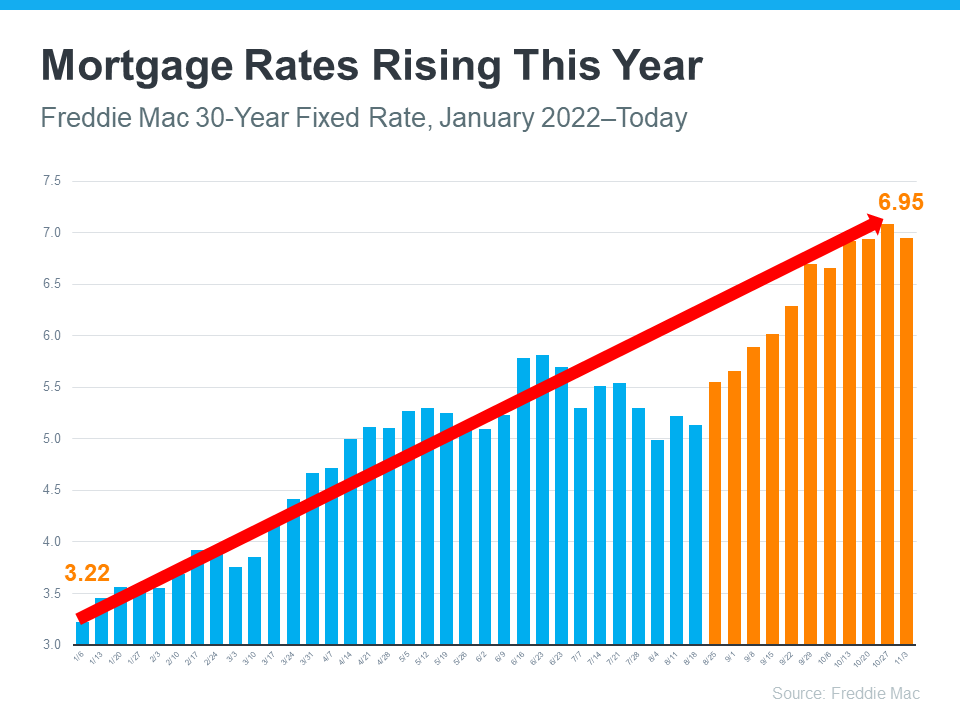
In their latest quarterly report, Freddie Mac explains just how fast the climb in rates has been:
“Just one year ago, rates were under 3%. This means that while mortgage rates are not as high as they were in the 80’s, they have more than doubled in the past year. Mortgage rates have never doubled in a year before.”
Because we’re in unprecedented territory, it’s hard to say with certainty where mortgage rates will go from here. Projecting the future of mortgage rates is far from an exact science, but experts do agree that, moving forward, mortgage rates will continue to respond to inflation. If inflation stays high, mortgage rates likely will too.
Home Price Changes Will Vary by Market
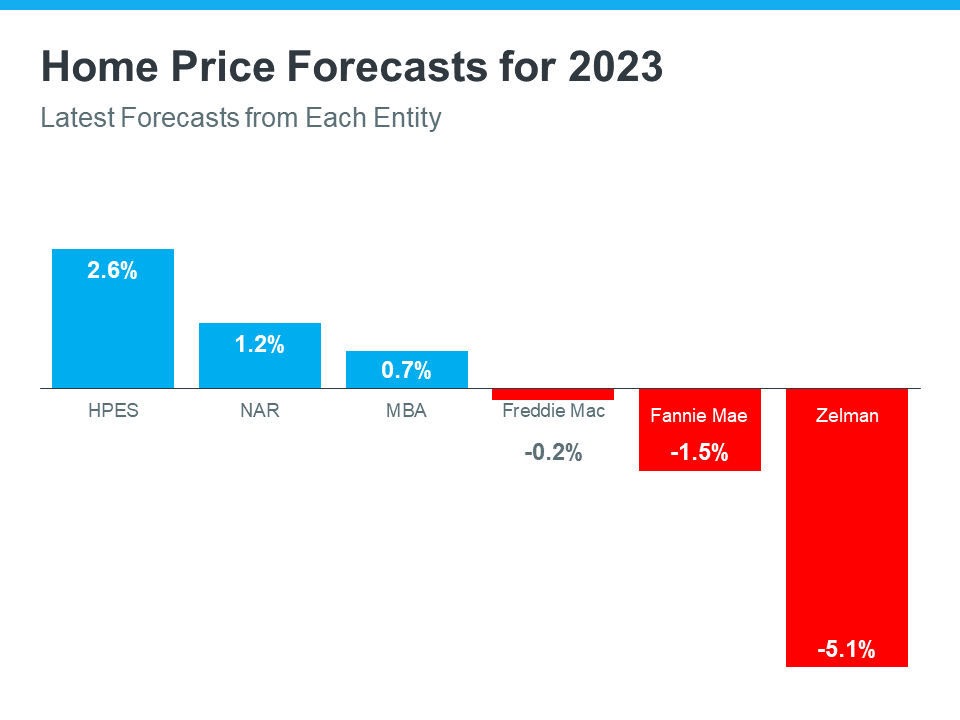
As buyer demand has eased this year in response to those higher mortgage rates, home prices have moderated in many markets too. In terms of the forecast for next year, expert projections are mixed. The general consensus is home price appreciation will vary by local market, with more significant changes happening in overheated areas. As Mark Fleming, Chief Economist at First American, says:
“House price appreciation has slowed in all 50 markets we track, but the deceleration is generally more dramatic in areas that experienced the strongest peak appreciation rates.”
Basically, some areas may still see slight price growth while others may see slight price declines. It all depends on other factors at play in that local market, like the balance between supply and demand. This may be why experts are divided on their latest national forecasts (see graph below):
Bottom Line
If you want to know what’s happening with home prices or mortgage rates, let’s connect so you have the latest on what experts are saying and what that means for our area.
Buying a Home in 2025? Do 3 Things ASAP!
Mortgage rates are expected to fall in 2025, easing the path to homeownership. As rates drop, more homeowners may sell, boosting real estate inventory and market opportunities.
What is ‘missing middle’ housing, and could it solve Utah’s housing crisis?
Since 2015, 87% of building permits in Utah have been for single-family homes, but experts suggest focusing on "missing middle housing" like duplexes and triplexes to address affordability. Daniel Parolek, who coined the term, emphasizes that these smaller,...
5 Reasons to Buy in 2025
Reduced demand could lead to stagnant or declining prices, creating better deals for new buyers. Buyers prepared with savings and good credit can benefit from hesitant competition.
What’s The Most Expensive Zip Code In Southern Utah?
A unique perspective on the current housing market highlights the challenges of home buying, especially in Utah, where prices have surged. A recent analysis of 184 ZIP codes revealed Park City (84060) as the most expensive, with a median home value of over $2.047...
Capital Economics 2025 Home Price Forecast
Capital Economics forecasts U.S. home prices will ↑ 4.0% in both 2025 and 2026, signaling a stable housing market.Limited inventory will likely prevent price declines, supporting steady growth despite constrained buyer demand.
Will 2025 Finally Be a Normal Housing Market?
New listings ↑ 8% weekly, signaling more seller activity as the market heads into 2025. Pending home sales ↑ 10% yearly, reflecting slight optimism in the housing market.
Join Our Newsletter
Lorem ipsum dolor sit amet, consectetur adipiscing elit. Phasellus lacinia velit a feugiat finibus. Morbi iaculis diam id tellus iaculis, eu pretium metus fermentu