
Reasons to Fall in Love with Homeownership

Reasons to Fall in Love with Homeownership

Reasons to Fall in Love with Homeownership

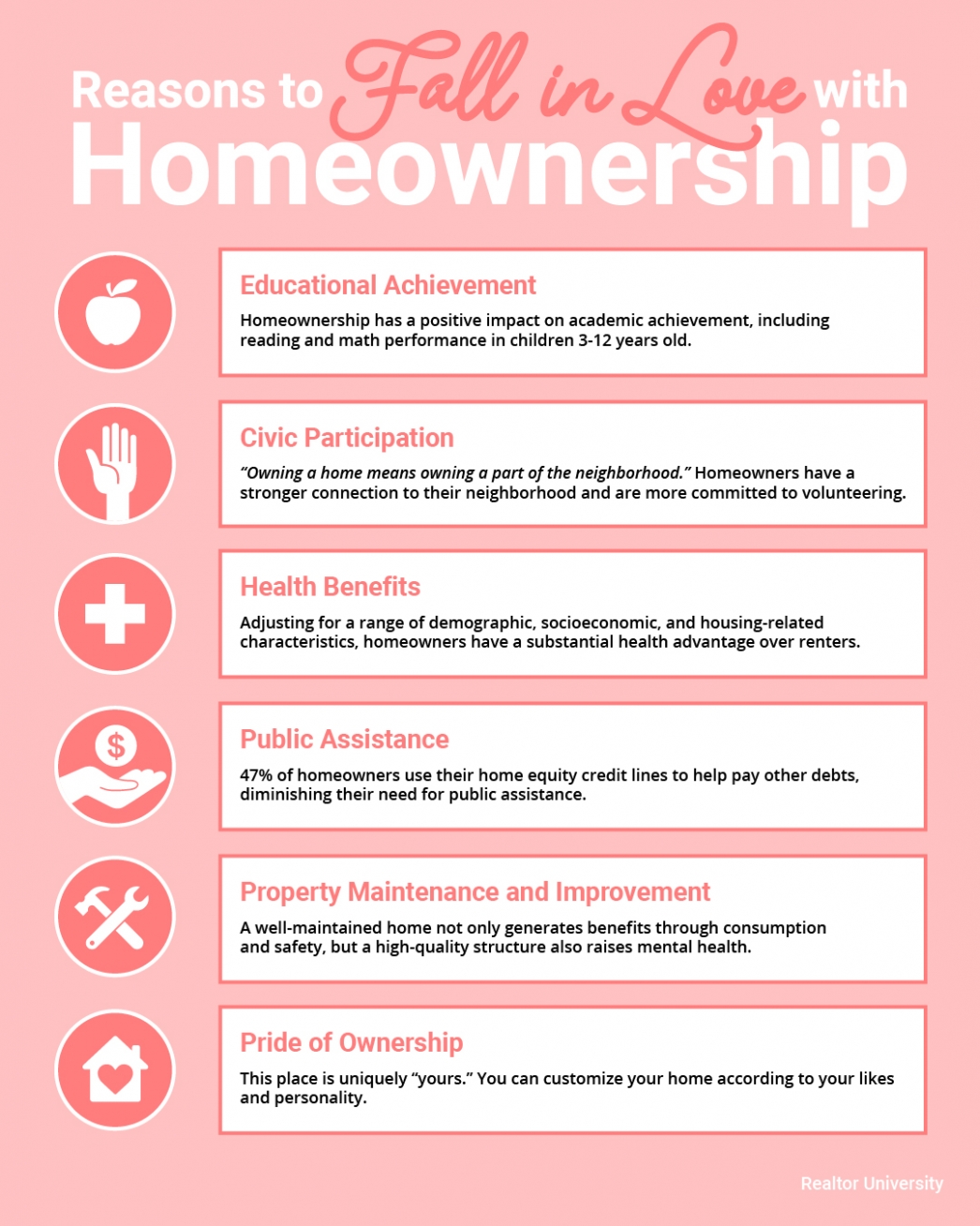
Top Reasons to Love Homeownership [INFOGRAPHIC] | MyKCM

Some Highlights:

  • There are many benefits to love about homeownership, and they’re not all financial.
  • Being a part of a neighborhood, driving academic achievement, and improving mental health are just a few of these advantages.
  • Let’s get together today to determine if you’re ready to embrace the rewards of owning your own home.
How the Housing Market Benefits with Uncertainty in the World

How the Housing Market Benefits with Uncertainty in the World

How the Housing Market Benefits with Uncertainty in the World

How the Housing Market Benefits with Uncertainty in the World | MyKCM

It’s hard to listen to today’s news without hearing about the uncertainty surrounding global markets, the spread of the coronavirus, and tensions in the Middle East, just to name a few. These concerns have caused some to question their investment plans going forward. As an example, in Vanguard’s Global Outlook for 2020, the fund explains,

“Slowing global growth and elevated uncertainty create a fragile backdrop for markets in 2020 and beyond.”

Is there a silver lining to this cloud of doubt?

Some worry this could cause concern for the U.S. housing market. The uncertainty, however, may actually mean good news for real estate.

Mark Fleming, Chief Economist at First American, discussed the situation in a recent report,

“Global events and uncertainty…impact the U.S. economy, and more specifically, the U.S. housing market…U.S. bonds, backed by the full faith and credit of the U.S. government, are widely considered the safest investments in the world. When global investors sense increased uncertainty, there is a ‘flight to safety’ in U.S. Treasury bonds, which causes their price to go up, and their yield to go down.”

Last week, in a HousingWire article, Kathleen Howley reaffirmed Fleming’s point,

“The death toll from the coronavirus already has passed Severe Acute Respiratory Syndrome, or SARS, that bruised the world’s economy in 2003…That’s making investors around the world anxious, and when they get anxious, they tend to sell off stocks and seek the safe haven of U.S. bonds. An increase in competition for bonds means investors, including the people who buy mortgage-backed bonds, have to take lower yields. That translates into lower mortgage rates.”

The yield from treasury bonds is the rate investors receive when they purchase the bond. Historically, when the treasury rate moves up or down, the 30-year mortgage rate follows. Here’s a powerful graph showing the relationship between the two over the last 48 years:Popular Perspective Delivers Gift to U.S. Housing Market | MyKCMHow might concerns about global challenges impact the housing market in 2020? Fleming explains,

“Even a small change in the 10-year Treasury due to increased uncertainty, let’s say a slight drop to 1.6 percent, would imply a 30-year, fixed mortgage rate as low as 3.3 percent. Assuming no change in household income, that would mean a house-buying power gain of $21,000, a five percent increase.”

Bottom Line

For a multitude of reasons, 2020 could be a challenging year. It seems, however, real estate will do just fine. As Fleming concluded in his report:

“Amid uncertainty, the house-buying power of U.S. consumers can benefit significantly.”

The #1 Reason to List Your House Right Now

The #1 Reason to List Your House Right Now

The #1 Reason to List Your House Right Now

The #1 Reason to List Your House Right Now | MyKCM

The success of the U.S. residential real estate market, like any other market, is determined by supply and demand. This means we need to look at how many potential purchasers are in the market versus the number of houses that are available to buy. With early 2020 housing data now rolling in, it’s quite evident there are two big stories impacting this year’s residential real estate market:

1. Buyer demand is already extremely strong
2. Housing supply is at a historically low level

Demand

ShowingTime is a firm that compiles data from property showings scheduled across the country. The latest ShowingTime Showing Index reveals how showings have increased in each of the country’s four regions for five months in a row.

Supply

Move.com also just released information indicating that the number of homes currently for sale has declined rapidly and now sits at the lowest level in almost a decade. They explained,

“National housing inventory declined 13.6 percent in January, the steepest year-over-year decrease in more than 4 years, pushing the supply of for sale homes in the U.S. to its lowest level since realtor.com began tracking the data in 2012.”

In response to these numbers, Danielle Hale, Chief Economist at realtor.com, said,

“Homebuyers took advantage of low mortgage rates and stable listing prices to drive sales higher at the end of 2019, further depleting the already limited inventory of homes for sale. With fewer homes coming up for sale, we’ve hit another new low of for sale-listings in January.”

The decrease in inventory impacted every price range, too. Here’s a graph showing the data released by move.com:The #1 Reason to List Your House Right Now | MyKCM

Bottom Line

Since there’s a historic shortage of homes for sale, putting your home on the market today could drive an excellent price and give you additional negotiating leverage when selling your house. Let’s get together to determine if listing your house now is your best move.

Underwater with Two Mortgages? Here are 5 Ways to Refinance

Underwater with Two Mortgages? Here are 5 Ways to Refinance

Underwater with Two Mortgages? Here are 5 Ways to Refinance

Having a second mortgage or home equity line can make refinancing an underwater mortgage nearly impossible, but one of these five strategies might bail out your refinance.

The mortgage market is awash in programs to help underwater home owners refinance, but if you have a second mortgage or a home equity line that’s causing you to owe more than your home is worth, you could be left high and dry.

If the first and second mortgages on your home put together exceed its value, you’re underwater.

To understand why being underwater on your two mortgages is a problem, you need to know how first and second mortgages work:

  • When you get your first mortgage, that lender is first in line to get paid off if you don’t pay your mortgage and your home is sold via foreclosure.
  • When you then get a home equity line or second mortgage, it’s called a second mortgage because that lender is second in line to get paid.
  • When you refinance your first mortgage, you actually pay off the original first mortgage. Unless you pay off the second mortgage, too, your second mortgage legally and automatically moves into place as your first mortgage.
  • No lender will give you a low, first mortgage interest rate unless it can be first in line for the foreclosure sale proceeds if you don’t make your payments. If your second mortgage has moved into first position, any new loan would automatically be behind it in line.

Here are five options that can help you refinance your first mortgage anyway:

Pin It on Pinterest