About Utah| Real Estate in Utah | Homes in Utah
Interesting facts about Utah.
Famous for its red rock landscapes, tall mountain peaks, arts and culture. Salt Lake City sits at the foot hills of world famous ski resorts. Home of the Park City Film Festival. Utah offers a diverse array of activities and entertainment for all ages. Many of the activities can only be found in Utah are unique this State. Utah it is centrally located in what is called the Intermountain West. Throughout history Utah is often called the “Crossroads of the West.” Because of it’s location in relationship to geological land areas: the Rocky Mountains, the Basin and Ridge Region, and the Colorado Plateau.
Utah has one of the highest literacy rate in the United States. According to Webster’s, “Utahans” is the grammatically correct way to refer to residents of Utah; however, most people from Utah stubbornly refer to themselves as “Utahns.
Utah is home to 35 Utah Four Year Colleges and Universities. The total comes to 84 Utah Colleges, Community Colleges, and Trade Schools.
The name “Utah” is derived from the name of the Ute Native American tribe. The name means “people of the mountains.
Utah is called the “Beehive State” The early settlers of Utah identified themselves with the industrious nature of the honeybee. The territory before it was a state was named Deseret, a word for honeybee in the Book of Mormon.This nickname commemorates the industry of the people of Utah. … The beehive is the centerpiece of the Utah State Flag and the Utah State Seal.
Utah has an average of only 33.6 people per square mile. Most Utahans live in the towns and cities along the Wasatch Front, which is the western side of the Wasatch Mountains. The 13th larges State with 84,898.83 square miles of land. Utah ranks 16th in water mass with 2,755.18 square miles of surface water.
Over 2/3 of Utah land is owned by the United States’ federal government.
Utah is the only state to have a cooking pot among its state symbols. The Dutch oven was approved as a state symbol by the legislature in 1997.
In Utah there is a town called “Levan.” Levan is “navel” backwards—and Levan is in the center, or is the “navel,” of Utah.
Approximately 75 million years ago, Utah was part of a landmass called Laramidia. This land mass was hot, swampy, and full of dinosaurs, which makes Utah one of the best places in the U.S. to find dinosaur fossils. In fact, the world’s largest raptor lived in Utah. Known as the “Utahraptor,” it measured over 23 feet long, making it larger than any other known raptor.
One of the most unique places in Utah is the Bonneville Salt Flats, named after the ancient sea that covered the area. Stretching over 30,000 acres, the white salt is millions of years old. Thousands of tourists, filmmakers, and land speed racers make it famous throughout the world.
A 2012 national survey carried out by Gallup Inc. deemed Utah as the “The Best State to Live in” in America.
As of 2018 the population of Utah has over 3 million people which makes it the 31st most populous state in the U.S. Salt Lake City is the capital of Utah and is the most populated with a count of 192,672 according to 2017 estimates. There are three other cities that have populations of more than 100,000: West Valley City, Provo and West Jordan. There are 54 cities in Utah with populations between 10,000 and 100,000.
Utah grapples with growing housing shortage as demand outpaces supply
Utah faces a housing shortage of about 44,000 units due to rapid population growth, high land prices, labor shortages, and restrictive zoning. Median home prices rose from $305,000 to $535,000 between 2018 and 2024, outpacing wages and limiting affordability....
New Year, New Sale: Renovating Your Home for 2025
Upgrade Kitchens and Bathrooms: Modern countertops, energy-efficient appliances, and updated fixtures increase home value and buyer interest.Boost Curb Appeal: Fresh landscaping, a painted front door, and new lighting create strong first impressions.

Tariffs to Inflate Remodeling and Home Prices
Tariffs on building materials are driving up construction costs, raising home prices, and slowing the housing market.New tariffs could add $7,500–$10,000 to home costs, making homeownership harder as demand continues to decline.
Key Benefits that most Veterans Overlook
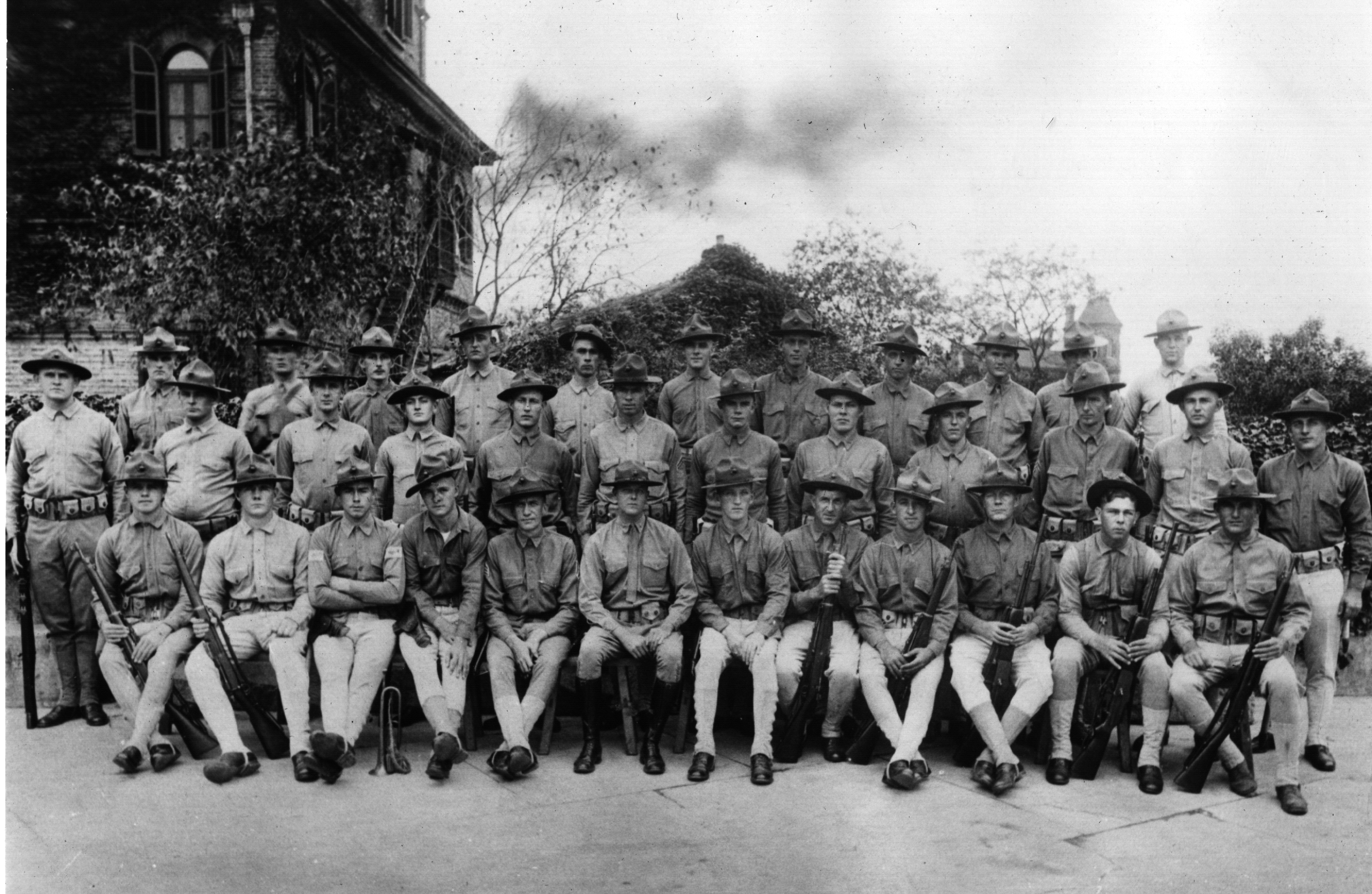
Navigating the path to homeownership can often seem daunting, particularly for veterans who have dedicated a significant portion of their lives to serving their country. The VA home loan program stands as a beacon of hope, offering a unique opportunity to those who...
Honoring Our Nation’s Heroes on Memorial Day.
This day honors the brave men and women who have sacrificed their lives to defend America's freedom.It became an official federal holiday in 1971. Americans observe Memorial Day by visiting cemeteries and memorials.
How to Determine Your Home’s Value
Robert and Kim are experts in personal finance at Newsweek. Determining your home value is crucial for selling your property. Methods include online tools, comparative market analysis, and professional appraisal. Factors like location, size, condition, comparable...
Real Estate Fortune: Why 2025 Is the Golden Year
2025 may present a unique opportunity for Real Estate agents despite ongoing industry challenges. An increase in inventory could lead to lower prices and more successful deals for agents.
New report reveals how one fast-growing expense is impacting homeowners: ‘Many may feel like they can never own a home’
Home insurance premiums in Utah have surged by 59% in three years, the highest increase nationwide, driven largely by climate change-related extreme weather. Rising costs are worsening the housing crisis, making homeownership harder, especially for first-time buyers....
US Homes: Will Growth Return in 2025?
U.S. home sales peaked in 2021, declined through 2024, and are expected to see mild growth in 2025-2026.Mortgage interest rates will continue influencing market trends, impacting prices and buyer demand.
Property Tax Trends Across the US
Rising property values have led to higher tax burdens, though some states cap assessments to limit drastic increases. Northeastern and Midwestern states generally impose higher property taxes, while Southern and Western states tend to have lower rates.