
Housing Hot Spots

New home construction today is giving buyers something it feels like they haven’t gotten much lately: a real shot at both the home they want and the deal they need. More brand-new options are on the market right now, and builders are rolling out incentives that make these homes more affordable than many people expect.
It’s a combination that doesn’t come around often – and it’s putting buyers in a surprisingly strong position this season. Here’s why this moment matters and why it’s worth partnering with your own local agent to take advantage of it.
There’s more new construction on the market today than normal. And for buyers, that means:
But that variety may not last.
Data from Zonda shows that even though it feels like new homes are popping up just about everywhere, builders have actually started pulling back. The number of starts (that’s when builders break ground) has been slowly but steadily declining over the past few years. And that’s good because it prevents overbuilding nationally.
But here’s the real insight that can give you an edge. Forecasts show that slight downward trend should continue next year (see graph below):
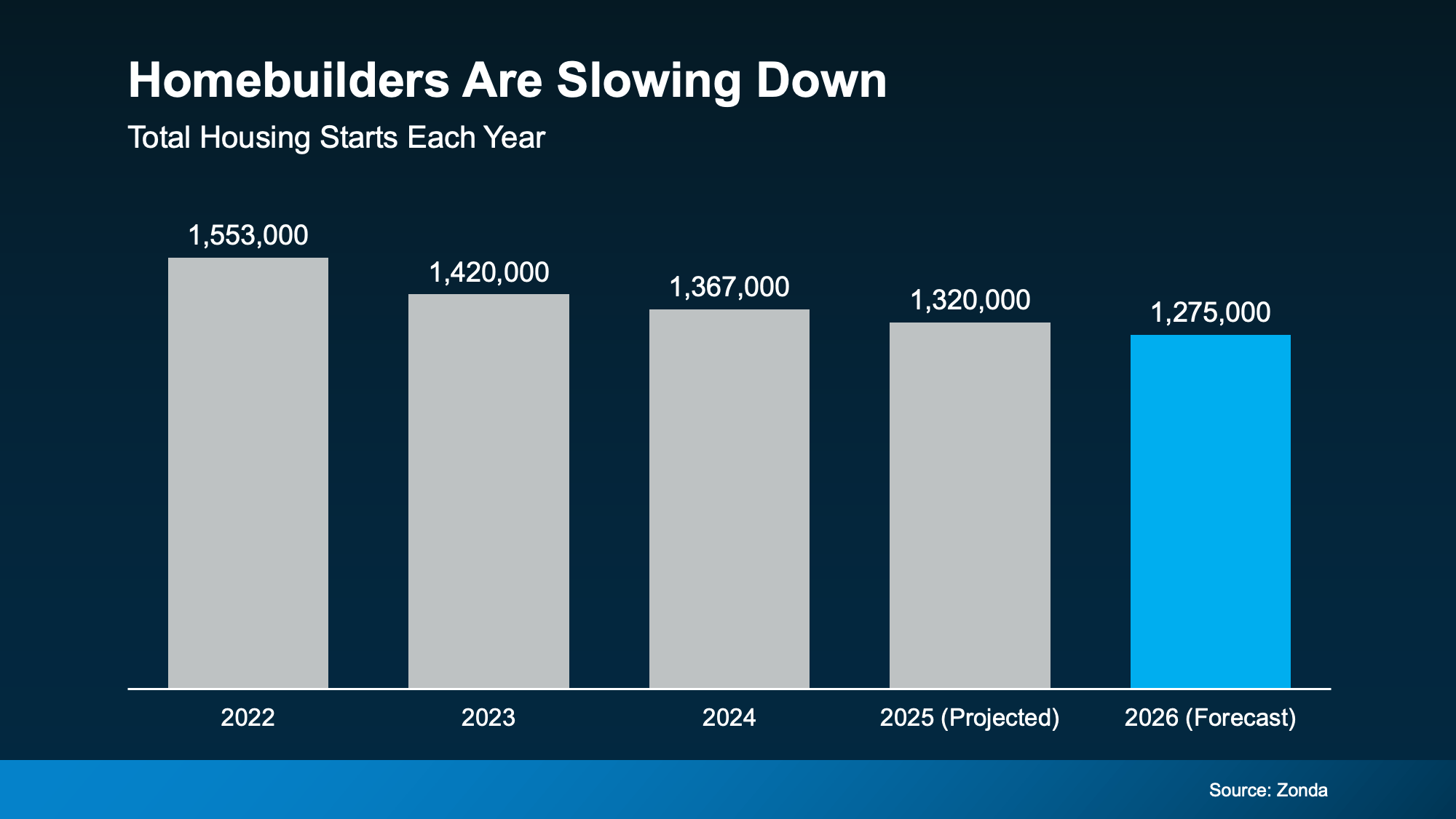 It’s a signal that the new inventory we have now may be your widest pool of all-new options for a while.
Today, Redfin says roughly 1 in 3 homes (27%) on the market are new builds. That’s higher than the norm, but the lowest share in four years. And it makes sense based on the graph above.
That means if you want more options to choose from, now’s the time to look.
And if you’re wondering: why the pullback? It’s simple. Since there are already more new homes for sale than usual, builders want to focus on selling down the supply they already have on the market rather than adding more new homes. And that leads to point two.
Here’s where things get even better for buyers. To make sure the inventory they have now keeps moving, builders are offering incentives at levels not seen in years – and many of those perks directly help buyers with affordability. Buyers today are getting:
But you don’t have to be lucky to see these types of perks. The truth is, the vast majority of builders are offering advantages like these right now. According to the National Association of Homebuilders (NAHB) 65% of builders say they’re using some type of sales incentive and:
“. . . 41% of builders reported cutting prices in November, a record high in the post-Covid period and the first time this measure has passed 40%.”
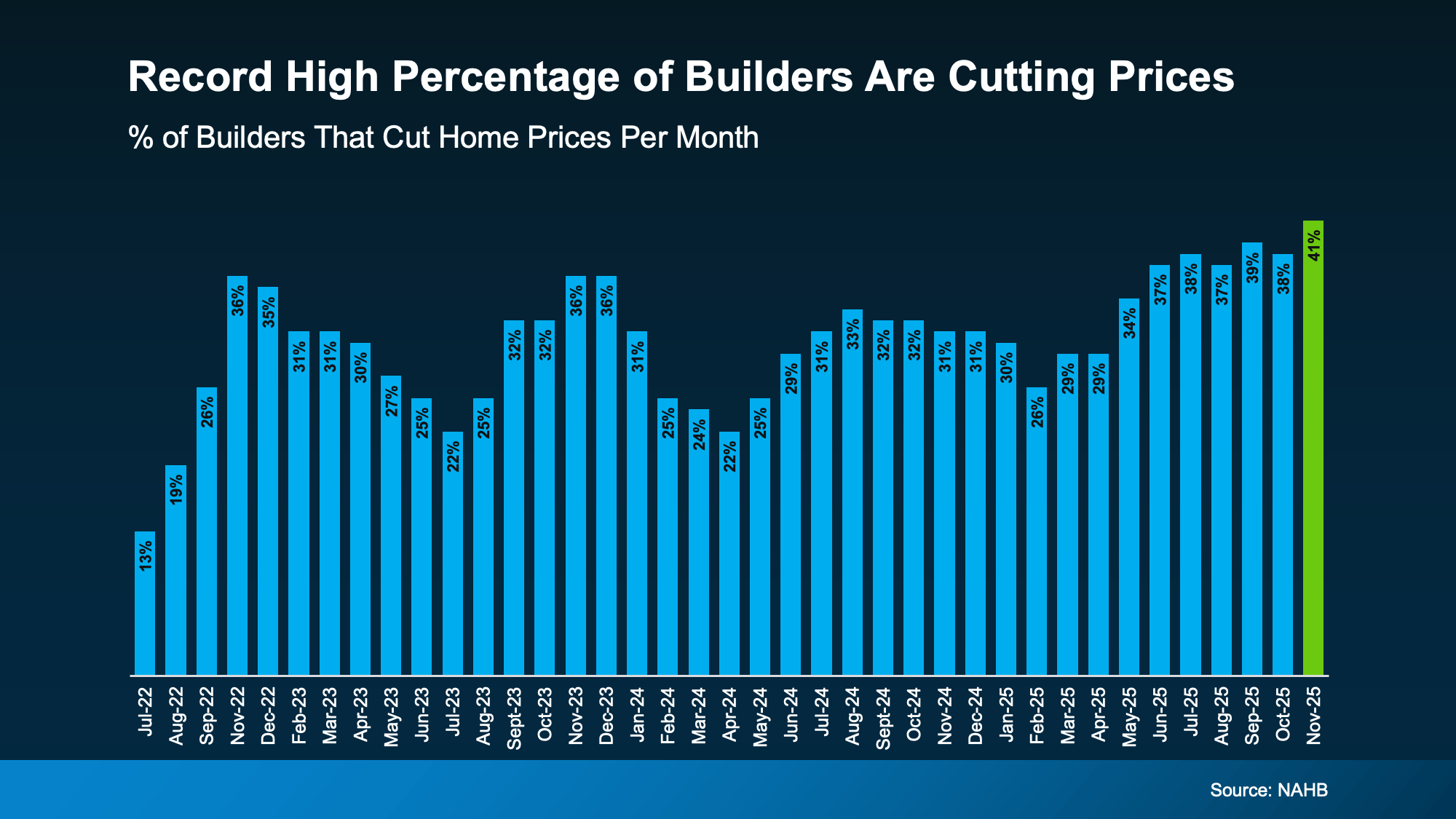 That’s a big deal. It shows how willing builders are to negotiate right now.
And if you look closely at the graph, you’ll notice the use of incentives typically falls in the early part of the year, as buyer demand rises going into the spring. So, you have an edge if you act now. This may be your ideal window to find the most options and better prices.
If you lean on your own agent and you’re savvy about what you ask for, you could walk away with some of the best perks buyers have seen in years. And when every dollar counts and any incentive helps your bottom line, that’s worth looking into.
More options and more savings = an offer too good to pass up.
With most builders offering generous incentives and a wider selection of new homes for sale, buyers may be looking at one of the best times in years to buy a new build.
Let’s connect if you want to know which communities, builders, and incentives offer the most value today. Having your own agent (not the builder’s representative) makes the sale and negotiation process that much easier for you.
If you could have a brand-new home for less than you may expect, would you be interested?
Halloween falls on October 31 because the ancient Gaelic festival of Samhain, considered the earliest known root of Halloween, occurred on this day.
In the eighth century, Pope Gregory III designated November 1 as a time to praise all saints.
Soon, All Saints' Day incorporated some traditions of Samhain and the evening before was known as All Hallows Eve, and later Halloween.
Over time, Halloween evolved into a day of activities like trick-or-treating, carving jack-o-lanterns, festive gatherings, donning costumes and eating treats.
Today’s the day to eat candies and sweets to your heart’s content! Happy Halloween!
High-net-worth buyers are increasingly relocating to the Mountain West states—Idaho, Montana, Wyoming, Utah, and Colorado—attracted by tax advantages, privacy, natural beauty, and outdoor recreation. Luxury real estate has evolved from rustic cabins to sophisticated estates, including mountain chalets, lakefront homes, gated communities, and modern custom builds. North Idaho is emerging as a notable luxury market offering value and year-round appeal. This shift reflects a new definition of luxury focused on space, nature, and lifestyle.

Visit Real Estate offices early and ask questions to gauge their professionalism and fit.
Understand seller motivations to make offers with attractive terms that could win deals.
Self-employed individuals can qualify for a home loan, but they may face additional challenges in proving income stability. To improve approval chances, consider non-conforming loans, make larger down payments, raise credit scores, and lower debts. Lenders require documentation like tax returns and business licenses. It's essential to shop around for lenders familiar with self-employment. Non-qualified loans may offer more flexible criteria. Maintaining separate business and personal expenses can also enhance creditworthiness.
Here is an overview of affordable cities in Utah for homebuyers in 2025, highlighting median prices, cost of living, and unique features for each city. This provides an at-a-glance guide to communities where your housing dollar might stretch further.
| City | Median Home Price | Why It’s Notable | Other Details |
|---|---|---|---|
| Ogden | ~$370,000–$373,000 | Historic downtown, walkable, mountain views | Utah Housing programs apply, strong community ties |
| Logan | ~$378,000–$383,000 | University town (Utah State), low cost of living | 10.5% below state average, good for students & young pros |
| Tooele | ~$385,000 | Spacious, overlooked commuter city | USDA loan eligible, large yards, growing amenities |
| Spanish Fork | ~$404,000–$425,000 | Suburban, family-friendly, outdoor activities | Lower-than-average rents, active events calendar |
| Provo | ~$425,000 | College town, scenic, close to SLC | Cheaper than Utah average, vibrant community |
| Eagle Mountain | ~$430,000–$520,000 | New builds, growing, affordable for Utah County | Lower property taxes, many new homes |
| Layton | ~$450,000–$535,000 | Central for SLC/Ogden commuters, good schools | Access to Air Force Base, larger lots |
| Saratoga Springs | ~$490,000 | Newer communities, Utah Lake views | Great for tech commuters, family-focused |
| Orem | ~$532,000 | BYU proximity, lots of new developments | Lower-than-state-average prices, suburban feel |
| St. George | ~$515,000 | Warm weather, outdoor paradise | Great for retirees, near Zion/Bryce NP |
| Roosevelt | ~$323,000 | Lowest median price, rural charm | 12% below national average, very affordable |
Ogden: Topping affordability lists, Ogden is a favorite for first-timers because of its lower prices, active downtown, and access to ski resorts and hiking.
Logan: A true college town with low-cost living, abundant jobs, and outdoor activities nearby.
Tooele: Offers the lowest entry point near the SLC metro—large lots and USDA-eligible mortgages make it attractive.
Spanish Fork & Provo: Family-friendly, strong job market, parks, good public schools. Provo sits below the state’s median, making it popular for budget-conscious buyers.
Eagle Mountain & Saratoga Springs: Both cities are growing fast, with new construction and incentives for first-time buyers. They provide great alternatives to Lehi or more expensive Utah County options.
Layton and Orem: Popular for commuters, with good schools and a blend of new and established neighborhoods.
St. George: Once considered pricier, now stands out for value relative to Southern Utah’s climate and outdoor lifestyle.
Roosevelt: Most affordable median on the list—ideal if rural, small-town living suits your needs.
The U.S. housing market is expected to see gradual growth through late 2025 and into 2026, with no major price drops on the horizon.
Existing-home sales rose 2% in July 2025, inventory is up 15.7% year-over-year, and the median price is holding steady at $422,400.
Mortgage rates, a key driver of affordability, are projected to dip from ~6.4% in late 2025 to potentially 5.8–6.0% in 2026, which could bring more buyers into the market.
Home prices are forecasted to rise modestly, with regional differences playing a big role in affordability and opportunity.
Inventory levels are at their highest since 2020, giving buyers more choices than in recent years.
The global residential Real Estate market will reach USD 19.5T by 2031, growing at 9.2% CAGR.
Urban growth in emerging nations will drive increased demand for residential Real Estate by 2030.
Childcare costs as a percent of median household income: 21.34%
Housing costs as a percentage of median household income: 20.84%
Percentage of population under age 10: 13.12%
Number of children under age 10: 155,636
Ratio of total population to primary care physicians: 1,311
Population living within a half mile of a park: 73.18%