The Perfect Home Could Be the One You Perfect After Buying

The Perfect Home Could Be the One You Perfect After Buying

The Perfect Home Could Be the One You Perfect After Buying

There’s no denying mortgage rates and home prices are higher now than they were last year and that’s impacting what you can afford. At the same time, there are still fewer homes available for sale than the norm. These are two of the biggest hurdles buyers are facing today. But there are ways to overcome these things and still make your dream of homeownership a reality.

As you set out to make a purchase this season, you’ll want to be strategic. This includes taking a close look at your wish list and considering what features you really need in your next home versus which ones are nice-to-have. This will help you avoid overextending your budget or limiting your pool of options too much because you’re searching for that perfect home.

Danielle Hale, Chief Economist at Realtor.com, explains:

“The key to making a good decision in this challenging housing market is to be laser focused on what you need now and in the years ahead, . . . Another key point is to avoid stretching your budget, as tempting as it may be . . .”

To help identify what you truly need, make a list of all the features you’ll want to see. From there, work to break those features into categories. Here’s a great way to organize your list:

  • Must-Haves – If a house doesn’t have these features, it won’t work for you and your lifestyle (examples: distance from work or loved ones, number of bedrooms/bathrooms, etc.).
  • Nice-To-Haves – These are features you’d love to have but can live without. Nice-to-haves aren’t dealbreakers, but if you find a home that hits all the must-haves and some of these, it’s a contender (examples: a second home office, a garage, etc.).
  • Dream State – This is where you can really think big. Again, these aren’t features you’ll need, but if you find a home in your budget that has all the must-haves, most of the nice-to-haves, and any of these, it’s a clear winner (examples: a pool, multiple walk-in closets, etc.).

If you’re only willing to tour homes that have all of your dream features, you may be cutting down your options too much and making it harder on yourself (and your budget) than necessary.

While you’d love to have granite countertops or a pool in the backyard, those are both things you could potentially add after you move. Instead, it may be best to focus on finding the things that you can’t change (like location or a certain number of rooms). Then, you can upgrade or add some of the other features or finishes you want later on.

Sometimes the perfect home is the one you perfect after buying it.

Once you’ve categorized your list in a way that works for you, discuss your top priorities with your real estate agent. They’ll be able to help you refine the list further, coach you through the best way to stick to it, and find a home in your area that meets your top needs.

Bottom Line

With the current affordability challenges and limited housing supply, you’ll want to be strategic so you can find a home that meets your needs while staying within your budget. Let’s connect to make that possible.

Marty Gale

Buy or Sell with Marty Gale

"Its The Experience"

Principal Broker and Owner of Utah Realty™

Licensed Since 1986

CERTIFIED LUXURY HOME MARKETING SPECIALIST (CLHM)

PSA  (Pricing Strategy Advisor)

General Contractor 2000 (in-active)
e-pro (advanced digital marketing) 2001
Certified Residential Specialist 2009

Certified Negotiation Expert 2014

Master Certified Negotiation Expert 2014
Certified Probate Specialist Since 2018

Senior Real Estate Specialist

Certified Divorce Specialist CDS


Contact me! 


Your Homebuying Adventure

Your Homebuying Adventure

Your Homebuying Adventure

Some Highlights

Marty Gale

Buy or Sell with Marty Gale

"Its The Experience"

Principal Broker and Owner of Utah Realty™

Licensed Since 1986

CERTIFIED LUXURY HOME MARKETING SPECIALIST (CLHM)

PSA  (Pricing Strategy Advisor)

General Contractor 2000 (in-active)
e-pro (advanced digital marketing) 2001
Certified Residential Specialist 2009

Certified Negotiation Expert 2014

Master Certified Negotiation Expert 2014
Certified Probate Specialist Since 2018

Senior Real Estate Specialist

Certified Divorce Specialist CDS


Contact me! 


Why You Need To Use a Real Estate Agent When You Buy a Home

Why You Need To Use a Real Estate Agent When You Buy a Home

Why You Need To Use a Real Estate Agent When You Buy a Home

If you’ve recently decided you’re ready to become a homeowner, chances are you’re trying to figure out what to do first. It can feel a bit overwhelming to know where to start, but the good news is you don’t have to navigate all of that alone.

When it comes to buying a home, there are a lot of moving pieces. And that’s especially true in today’s housing market. The number of homes for sale is still low, and home prices and mortgage rates are still high. That combination can be tricky if you don’t have reliable expertise and a trusted advisor on your side. That’s why the best place to start is connecting with a local real estate agent.

Agents Are the #1 Most Useful Source in the Buying Process

The latest annual report from the National Association of Realtors (NAR) finds recent homebuyers agree the #1 most useful source of information they had in the home buying process was a real estate agent. Let’s break down why.

How an Agent Helps When You Buy a Home

When you think about a real estate agent, you may think of someone taking you on home showings and putting together the paperwork, but a great agent does so much more than that. It’s not just being the facilitator for your purchase, it’s being your guide through every step.

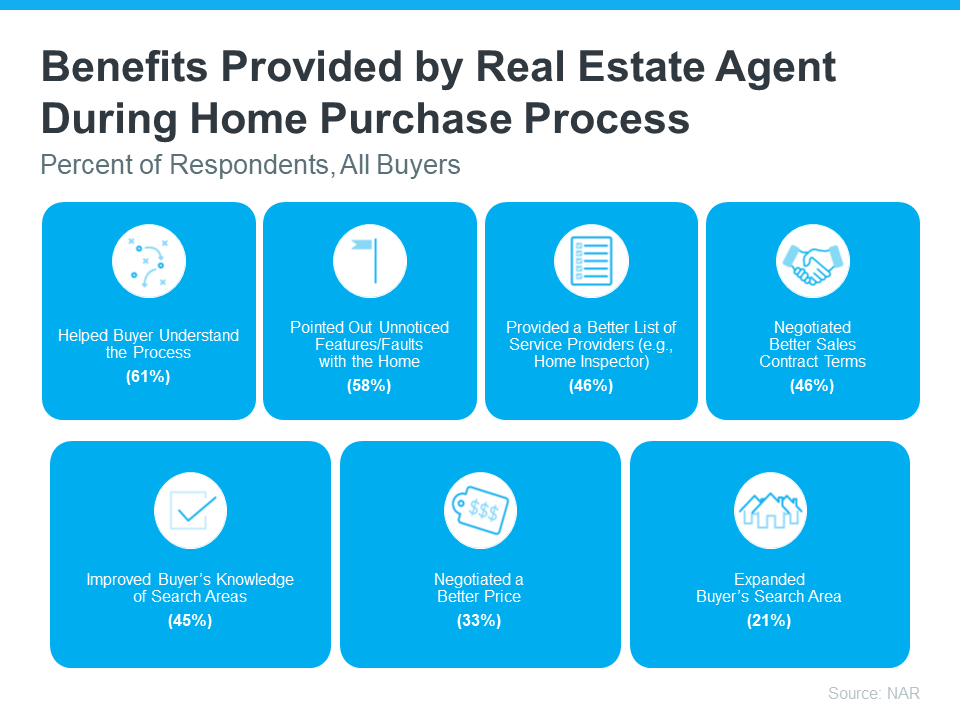
The visual below shows some examples from that same NAR release of the many ways an agent adds value. It includes the percentage of homebuyers in that report who highlighted each of these benefits:

Here’s a bit more context on how the survey results noted an agent continually helps buyers in these situations:

  • Helped Buyer’s Understand the Process: Do you know the difference between an inspection and an appraisal, what each report tells you, and why they’re both important? Or that there are things you shouldn’t do after applying for a mortgage, like buying appliances or furniture? An agent knows all of these best practices and will share them with you along the way, so you don’t miss any key steps by the time you get to the closing table.
  • Pointed Out Unnoticed Features or Faults with the Home: An agent also has a lot of experience evaluating homes. They’ve truly seen it all. They’ll be able to pinpoint some things you may not have noticed about the home that could help inform your decision or at least what repairs you ask for.
  • Provided a Better List of Service Providers: In a real estate transaction, there are a lot of people involved. An agent has experience working with various professionals in your area, like home inspectors, and can help connect you with the pros you need for a successful experience.
  • Negotiated Better Contract Terms and Price: Did something pop up in the home inspection or with the appraisal? An agent will help you re-negotiate as needed to get the best terms and price possible for you, so you feel confident with your big purchase.
  • Improved Buyer’s Knowledge of the Search Area: Moving to a new town and you’re not familiar with the area, or you’re staying nearby, but don’t know which neighborhoods are most affordable? Either way, an agent knows the local area like the back of their hand and can help you find the perfect location for your needs.
  • Expanded Buyer’s Search Area: And if you’re not finding anything you’re interested in within your initial search radius, an agent will know other neighborhoods nearby you should consider based on what you like, what amenities you want, and more.

Bottom Line

If you’re looking to buy a home, don’t forget about the many ways an agent is essential to that process. Any hurdle that pops up, a negotiation that needs to take place, and more, your agent will know how to handle it while they make sure to minimize your stress along the way. Let’s connect to tackle this together.

Marty Gale

Buy or Sell with Marty Gale

"Its The Experience"

Principal Broker and Owner of Utah Realty™

Licensed Since 1986

CERTIFIED LUXURY HOME MARKETING SPECIALIST (CLHM)

PSA  (Pricing Strategy Advisor)

General Contractor 2000 (in-active)
e-pro (advanced digital marketing) 2001
Certified Residential Specialist 2009

Certified Negotiation Expert 2014

Master Certified Negotiation Expert 2014
Certified Probate Specialist Since 2018

Senior Real Estate Specialist

Certified Divorce Specialist CDS


Contact me! 


New Loan Limits Raised To Help Home Buyers in 2024

New Loan Limits Raised To Help Home Buyers in 2024

The year 2024 has begun with a bang, as the Federal Housing Administration (FHA) and conventional loan limits have increased. This means that potential homebuyers and refinancers now have even more opportunities to secure funding for their dream homes or make improvements to their existing properties. In this article, we will dive into the details of these new loan limits and discuss how they can benefit you. So, let’s get started on your journey to homeownership or financing your next venture!

Understanding The New Loan Limits For 2024

With the turn of the year, major changes have taken place in the loan industry, particularly with regard to the Federal Housing Administration (FHA) and conventional loan limits. These changes have been eagerly anticipated by homebuyers, real estate agents, and lenders alike. The new loan limits for 2024 have increased, and prospective homebuyers need to understand what this means for their borrowing power.

The FHA loan program, managed by the Department of Housing and Urban Development (HUD), ensures that more Americans have access to affordable housing options. FHA loans are favored by first-time homebuyers due to their low down payment requirements and flexible credit guidelines. The loan limits for FHA loans vary by county, taking into account local housing market conditions. For 2024, these loan limits have seen a considerable increase across the country.

Counties in the State of Utah where the median home value is below the national average, the FHA loan limit has been raised to $498,257.  Counties that have a cap of $498,257 are Beaver, Cache, Carbon Daggett, Duchesne, Emery, Garfield, Iron, Kane, Millard, Piute, Sanjuan, Sanpete, Sevier, and Unitah Counties. Other counties have caps that are as follows: Grand County $607,200, Juab County $601,450, Rich County $579,600, Salt Lake County $619,850, Utah County  $601,450, Washington County $593,400, Weber County $744,050 Wasatch County and Summit County  $1,149,825, Morgan County $744,050, and Davis County $744,050.

The conventional loan market has also seen an increase in loan limits for 2024. Conventional loans are not insured or guaranteed by a government agency like FHA loans, and they typically require higher credit scores and down payments. However, they offer more flexibility in terms of loan amount and property types.

For single-unit properties, the loan limit for conventional loans has been raised to $647,200. This means that borrowers can now secure a conventional loan up to this amount without having to resort to jumbo loans, which often carry higher interest rates and stricter qualification criteria. In certain areas with higher construction costs or high demand, the loan limit can be even higher, allowing more buyers to afford homes in these locations.

Understanding the new loan limits for 2024 is crucial for prospective homebuyers as it directly impacts their borrowing power and the type of loan they can qualify for. The increased loan limits make homeownership more accessible and affordable for a broader range of individuals and families.

However, it’s important to note that while the new loan limits have increased, other factors such as credit scores, debt-to-income ratios, and employment history still play a significant role in determining a borrower’s eligibility for a home loan. Lenders will still evaluate these factors to ensure that borrowers have the financial ability to repay the loan.

While the higher loan limits offer larger loan amounts, potential homebuyers should carefully consider their financial capabilities and budget before taking on a larger loan. It’s crucial to strike a balance between borrowing as much as possible and maintaining a comfortable monthly payment that aligns with one’s financial goals and lifestyle.

In conclusion, the new loan limits for 2024 have increased for both FHA and conventional loans, providing opportunities for more homebuyers to enter the market and purchase their dream homes. The expanded loan limits reflect the growing cost of housing across the country and aim to make homeownership more attainable for a wider range of individuals. However, it’s essential to approach borrowing with caution and factor in personal financial circumstances to ensure responsible homeownership and long-term financial stability.

Exploring The Increased FHA Loan Limits

The Federal Housing Administration (FHA) recently announced an increase in loan limits for 2024, bringing good news for homebuyers who are considering applying for an FHA loan. These new limits are set to take effect on January 1st, 2024, and are designed to keep pace with the increasing cost of housing in various markets across the United States.

The FHA loan program has been an essential resource for many first-time homebuyers, as it offers more lenient qualification requirements and lower down payment options compared to conventional loans. With the increased loan limits, potential homebuyers will have greater access to affordable financing, allowing them to purchase homes in higher-priced markets.

For a better understanding of the impact of these increased loan limits, let’s explore what this means for homebuyers considering an FHA loan:

1. Enhanced Buying Power: With higher loan limits, potential homebuyers will have more buying power in high-cost areas like California, New York, and Massachusetts. It means that borrowers can secure a larger loan amount, enabling them to consider a wider range of properties within their desired location.

2. Increased Access to Affordable Housing: One of the main goals of the FHA loan program is to assist low- and moderate-income borrowers in accessing affordable housing. By raising the loan limits, more borrowers will qualify for FHA loans, potentially opening up additional opportunities for homeownership in areas where the median home prices are higher.

3. Reduced Down Payment Requirements: FHA loans require a minimum down payment of 3.5% compared to the 5% or more required by conventional loans. With the increased loan limits, borrowers can take advantage of this lower down payment requirement while still being able to purchase a home in a more expensive market.

4. Potentially Lower Interest Rates: FHA loans often come with competitive interest rates, which can be particularly beneficial for borrowers who may have lower credit scores. With the increased loan limits, more borrowers will be eligible for FHA loans, potentially driving down interest rates due to increased demand for these loans.

5. Streamlined Refinancing Options: For homeowners with existing FHA loans who are looking to refinance, the increased loan limits also bring potential advantages. Higher loan limits can provide an opportunity to refinance into a larger loan, allowing homeowners to tap into their home equity and potentially secure a lower interest rate.

It is important to note that while the FHA loan limits have been increased, borrowers must still meet the FHA’s qualifying criteria, including creditworthiness, income requirements, and debt-to-income ratios. Additionally, loan limits will vary based on location, as they are determined by housing market data.

In conclusion, the increased FHA loan limits for 2024 are undoubtedly a positive development for prospective homebuyers, particularly those looking to purchase homes in high-cost areas. By expanding the loan limits, the FHA aims to provide a greater opportunity for affordable homeownership and bridge the gap for individuals who may have previously struggled to secure financing. Whether you’re a first-time homebuyer or looking to refinance an existing FHA loan, these increased loan limits open up new possibilities and make homeownership an achievable dream for many.

Unveiling The Expanded Conventional Loan Limits

Most of Utah has a conventional loan limits of $766,550. Summit and Wasatch Counties are  $1,149,825, with Wayne County at $997,050.

With the new year comes new opportunities, especially in the world of home financing. The Federal Housing Administration (FHA) and conventional loan limits for 2024 have increased, providing potential homebuyers with expanded options and greater purchasing power. In this article, we will focus on the expanded conventional loan limits and how they can benefit those in the market for a new home.

Conventional loans, as opposed to government-backed loans like FHA loans, are mortgages that are not insured or guaranteed by a government agency. These loans are often sought after by borrowers with strong credit profiles and the ability to make a larger down payment. With the recent increase in conventional loan limits, borrowers now have a greater capacity to secure financing for their dream homes.

So, what exactly do the expanded conventional loan limits mean for homebuyers? Essentially, these limits determine the maximum amount that can be borrowed in a specific geographic area, without surpassing the boundaries set by loan type and property size. The higher the loan limit in a given area, the more purchasing power borrowers have when it comes to securing a conventional loan.

The conventional loan limits for 2024 have been adjusted to reflect the ongoing trends in the housing market and the rising cost of real estate. This increase allows borrowers to access larger loan amounts, which can be advantageous for those residing in high-cost areas or seeking to invest in pricier properties. In fact, in certain expensive urban areas, the expanded loan limits can help bridge the gap between the price of homes and the financing options available, making homeownership more achievable for many.

For instance, let’s say you are looking to purchase a home in a metropolitan area where property prices have steadily risen over the years. With the expanded conventional loan limits, you now have the opportunity to obtain a larger loan amount, provided you meet the necessary requirements. This means being able to access additional funds to put towards your down payment, making it easier to afford a home that might have previously been out of reach.

Moreover, the expanded conventional loan limits can also have a positive impact on the real estate market as a whole. By raising the loan limits, potential buyers are given the ability to invest in higher-priced properties, which can spur growth and stability in certain neighborhoods. Additionally, this increase may attract more investors and homebuyers, injecting vitality into the housing industry and providing a boost to the local economy.

However, it’s important to remember that the expanded conventional loan limits do not guarantee loan approval. Borrowers must still meet specific criteria related to creditworthiness, income, and employment history. Lenders will assess each individual’s financial situation and determine their eligibility based on these factors, in addition to the loan limits set for their specific area.

In conclusion, the expanded conventional loan limits for 2024 offer a significant opportunity for homebuyers to afford properties that were previously out of their reach. With the higher loan limits, borrowers can access larger loan amounts, making homeownership in high-cost areas a possibility for many. This increase in purchasing power not only benefits individual buyers but also has a positive impact on the real estate market as a whole. As always, it is crucial to consult with a trusted lender or mortgage professional to explore the best loan options available and determine the borrowing capacity within the expanded loan limits.

How These Changes Impact Homebuyers And Real Estate Market

The recent increase in loan limits for FHA and conventional loans in 2024 has brought about several key changes that directly impact homebuyers and the real estate market as a whole. These adjustments have the potential to affect various aspects of the homebuying process, including affordability, loan options, and market dynamics.

One of the primary ways in which these changes impact homebuyers is by increasing their ability to qualify for larger loan amounts. The higher loan limits mean that potential buyers can now access more funds to purchase a home, allowing them to consider properties that may have previously been out of their financial reach. This expansion of loan options presents an opportunity for individuals and families to explore a broader range of housing options that better suit their needs and preferences.

Moreover, the increased loan limits also address the issue of housing affordability by helping to bridge the gap between rising home prices and buyers’ purchasing power. Many housing markets across the country have experienced significant price appreciation over the past few years, making it challenging for some homebuyers to enter the market. With the higher loan limits, more buyers may have the opportunity to purchase homes in areas that were previously unaffordable. This could potentially contribute to a more robust and inclusive real estate market by offering a greater range of possibilities to a broader segment of the population.

In addition to individual homebuyers, the real estate market as a whole is also impacted by these loan limit increases. The availability of larger loan amounts can stimulate demand for homes in certain markets, leading to increased competition among buyers. As a result, sellers may find themselves in a more favorable position, with the potential for multiple offers and quicker property turnover. This heightened level of activity can create a dynamic market environment, encouraging homeowners to list their properties and contributing to overall market growth.

Furthermore, the increased loan limits can also facilitate the financing of higher-priced properties. In certain areas where property values are already high, the previous loan limits may have been restrictive, limiting the pool of potential buyers. With the new limits, more buyers can access financing for properties in these areas, which could, in turn, drive home prices higher as demand increases. This effect might be particularly noticeable in competitive markets where supply is limited, potentially leading to further price appreciation.

It’s worth noting that while the increase in loan limits brings many benefits, it is essential for homebuyers and industry professionals to proceed with caution and consider their financial capabilities. A larger loan amount may allow for more extensive purchasing power, but it also means taking on a higher level of debt. As with any mortgage, borrowers should carefully evaluate their finances, budget, and personal circumstances before committing to a higher loan amount. Consulting with a qualified mortgage advisor or financial professional is always recommended to ensure that the loan is both suitable and manageable.

Overall, the new loan limits for 2024 FHA and conventional loans have created opportunities and potential challenges for homebuyers and the wider real estate market. The increased access to financing empowers buyers to consider a broader range of properties and promotes housing affordability, while also driving market dynamics and influencing property values. It is crucial for all parties involved to navigate these changes judiciously, considering their individual financial situations and market conditions to make informed decisions that align with their long-term goals.

Marty Gale

Buy or Sell with Marty Gale

"Its The Experience"

Principal Broker and Owner of Utah Realty™

Licensed Since 1986

CERTIFIED LUXURY HOME MARKETING SPECIALIST (CLHM)

PSA  (Pricing Strategy Advisor)

General Contractor 2000 (in-active)
e-pro (advanced digital marketing) 2001
Certified Residential Specialist 2009

Certified Negotiation Expert 2014

Master Certified Negotiation Expert 2014
Certified Probate Specialist Since 2018

Senior Real Estate Specialist

Certified Divorce Specialist CDS


Contact me! 


Experts Project Home Prices Will Rise over the Next 5 Years

Experts Project Home Prices Will Rise over the Next 5 Years

Experts Project Home Prices Will Rise over the Next 5 Years

Even with so much data showing home prices are actually rising in most of the country, there are still a lot of people who worry there will be another price crash in the immediate future. In fact, a recent survey from Fannie Mae shows that 23% of consumers think prices will fall over the next 12 months. That’s nearly one in four people who are dealing with that fear – maybe you’re one of them.

To help ease that concern, here’s what the experts say will happen with home prices not just next year, but over the next five years.

Experts Project Ongoing Appreciation

While seeing a small handful of expert opinions may not be enough to change your mind, hopefully, a larger group of experts will reassure you. Here’s that larger group.

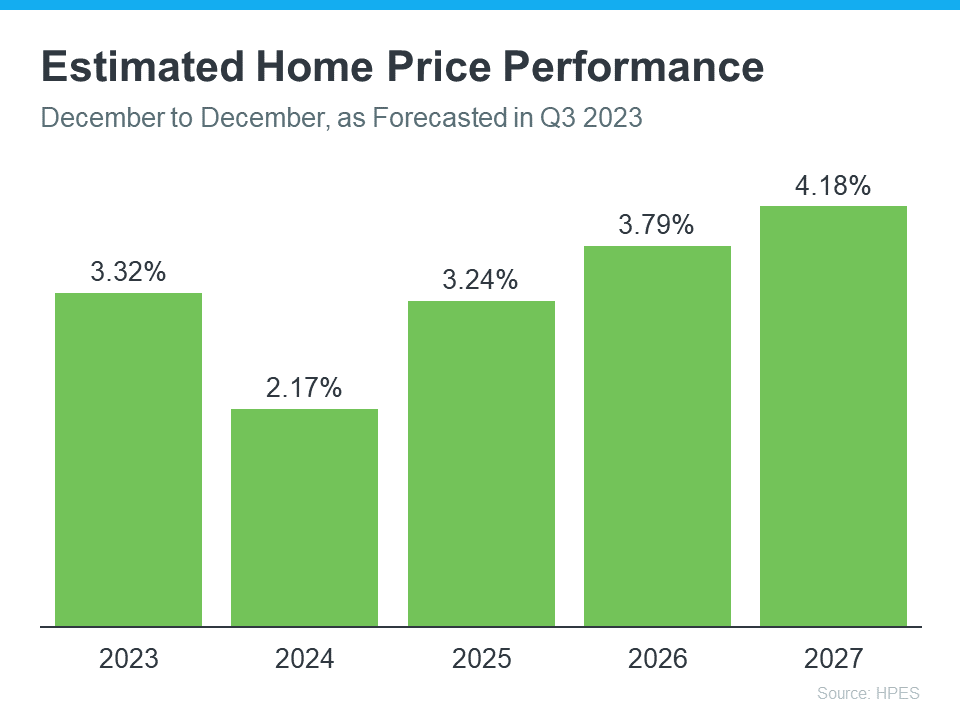
The Home Price Expectation Survey (HPES) from Pulsenomics is a great resource to show what experts forecast for home prices over a five-year period. It includes projections from over 100 economists, investment strategists, and housing market analysts. And the results from the latest quarterly release show home prices are expected to go up every year through 2027 (see graph below):

And while the projected increase in 2024 isn’t as large as 2023, remember home price appreciation is cumulative. In other words, if these experts are correct after your home’s value rises by 3.32% this year, it should go up by another 2.17% next year.

If you’re worried home prices are going to fall, here’s the big takeaway. Even though prices vary by local area, experts project they’ll continue to rise across the country for years to come at a pace that’s more normal for the market.

What Does This Mean for You?

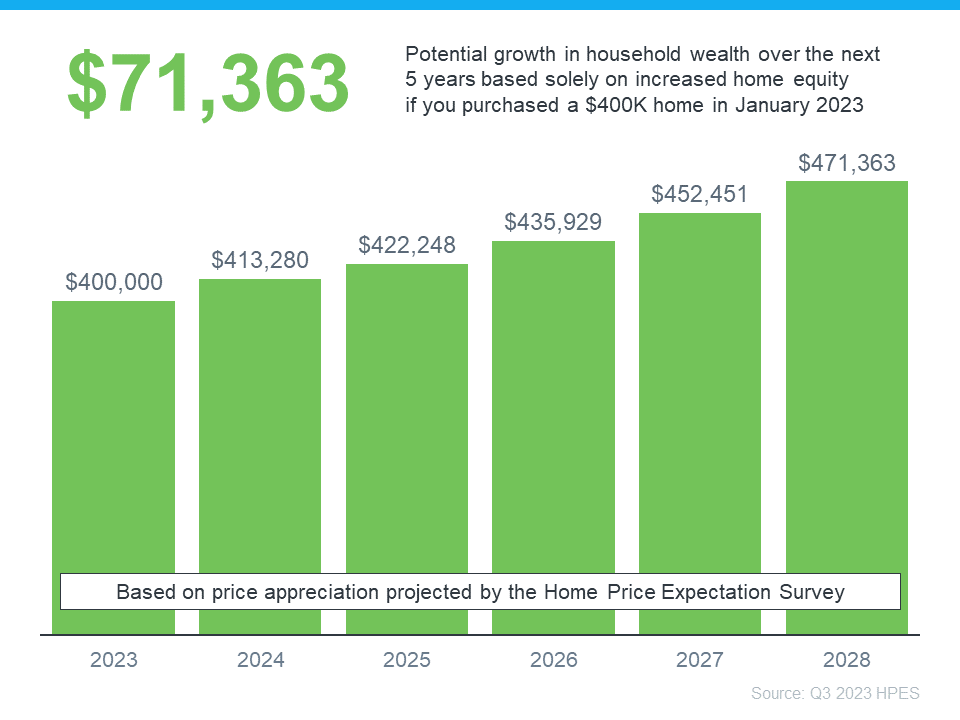
If you’re not convinced yet, maybe these numbers will get your attention. They show how a typical home’s value could change over the next few years using the expert projections from the HPES. Check out the graph below:

In this example, let’s say you bought a $400,000 home at the beginning of this year. If you factor in the forecast from the HPES, you could potentially accumulate more than $71,000 in household wealth over the next five years.

Bottom Line

If you’re someone who’s worried home prices are going to fall, rest assured a lot of experts say it’s just the opposite – nationally, home prices will continue to climb not just next year, but for years to come. If you have any questions or concerns about what’s next for home prices in our local area, let’s connect.

Marty Gale

Buy or Sell with Marty Gale

"Its The Experience"

Principal Broker and Owner of Utah Realty™

Licensed Since 1986

CERTIFIED LUXURY HOME MARKETING SPECIALIST (CLHM)

PSA  (Pricing Strategy Advisor)

General Contractor 2000 (in-active)
e-pro (advanced digital marketing) 2001
Certified Residential Specialist 2009

Certified Negotiation Expert 2014

Master Certified Negotiation Expert 2014
Certified Probate Specialist Since 2018

Senior Real Estate Specialist

Certified Divorce Specialist CDS


Contact me! 


Wednesday Word  |  After-Repair Value

Wednesday Word | After-Repair Value

“Wednesday Word”     After-Repair Value or ARV

 
What Is After-Repair Value (ARV) In Real Estate? ARV is the estimated value of a property after completed renovations, not in its current condition. House flippers commonly use ARV as a way to gauge the worth of a fixer-upper property, including how much it can be bought, and then resold for after repairs.
House flippers commonly use ARV as a way to gauge the worth of a fixer-upper property, including how much it can be bought, and then resold for after repairs.

The world of House Flipping!  Let’s delve into the world of real estate and uncover the ins and outs of ARV, or After Repaired Value. In today’s discussion, we will specifically focus on the challenges faced by homeowners when dealing with house flippers. With the rising popularity of flipping properties for profit, it’s essential to understand the concept of ARV and the potential pitfalls that can arise during these transactions. Whether you’re a homeowner looking to sell or a curious enthusiast of real estate, this article aims to provide you with valuable insights into the world of house flipping and the problems that can arise when dealing with one.

Understanding ARV: The Key Metric For House Flippers

Understanding ARV: The Key Metric For House Flippers

When it comes to the world of house flipping, one of the most crucial metrics to understand is the After Repaired Value (ARV). ARV represents the estimated value of a property after it has been repaired and renovated, making it a vital tool for both experienced and novice house flippers. This metric not only helps flippers determine potential profit margins but also assists in assessing risks and making smart investment decisions.

House flippers are individuals or companies who purchase distressed properties, renovate them, and sell them for a profit. The success of their endeavors largely depends on accurately estimating the ARV of the property they plan to flip. However, determining the ARV is not as simple as it may seem. It requires a thorough analysis of various factors, including market trends, property condition, location, and the costs associated with repairs and renovations.

One common problem that house flippers encounter is underestimating the ARV. When flippers fail to accurately assess the potential value of a property after it has been repaired, it can lead to significant financial losses. Overlooking important details or relying on outdated information can result in unrealistic expectations and an inability to sell the property at the desired price.

To avoid this problem, flippers should conduct comprehensive market research and utilize the expertise of real estate professionals. This may involve studying comparable properties in the area that have recently sold, analyzing market trends, and consulting with realtors or appraisers who have a deep understanding of the local market. By incorporating these analyses into their calculations, flippers can make more informed decisions and mitigate potential risks.

Another challenge that flippers often face is accurately estimating the cost of repairs and renovations. Renovating a property can be a complex process, and unforeseen expenses are not uncommon. Flippers must consider the cost of materials, labor, permits, and potential delays when determining the budget for renovations. Any miscalculations in this area can significantly impact their profit margins.

To overcome this challenge, it is crucial for flippers to work closely with contractors and other professionals in the construction industry. Having reliable and trustworthy experts who can accurately assess the scope of work and provide accurate cost estimates is essential. By involving professionals from the beginning, flippers can avoid unexpected surprises and ensure that their budget aligns with the desired outcome.

Additionally, flippers must also take into account the time it takes to renovate and sell the property. Holding costs, such as loan payments, property taxes, and utilities, can quickly eat into profits if the property remains on the market for an extended period. Therefore, accurately estimating the time required for renovations and factoring it into financial planning is essential for successful house flipping.

In conclusion, ARV is a key metric for house flippers, allowing them to determine potential profit margins, assess risks, and make informed investment decisions. Understanding ARV requires a comprehensive analysis of various factors and market trends, as well as accurate calculations of repair and renovation costs. By avoiding common pitfalls such as underestimating the ARV or miscalculating renovation expenses, flippers can increase their chances of success in the highly competitive world of house flipping.

The Appeal And Pitfalls Of House Flipping

House flipping has gained significant popularity over the years, attracting both seasoned investors and budding entrepreneurs looking to make a quick profit in the real estate market. With the promise of substantial returns, the appeal of house flipping is undeniable. However, behind the allure lies a host of potential pitfalls and challenges that house flippers must navigate.

At the heart of successful house flipping lies a key concept known as the After Repaired Value (ARV). ARV refers to the estimated value of a property after it has undergone necessary repairs and renovations. This value is crucial for house flippers as it determines the potential profit or loss they will incur on their investment.

The ARV is calculated by considering several factors, including the current market conditions, the property’s location, its size and layout, as well as the quality of the repairs and upgrades to be made. For house flippers, accurately estimating the ARV is essential in determining the purchase price they are willing to pay for a distressed property.

The appeal of house flipping lies in the potential for substantial profits. Successful house flippers can often turn a neglected, run-down property into a desirable living space, commanding a higher price in the market. This ability to transform a property and contribute to the revitalization of neighborhoods can be incredibly fulfilling for investors.

Moreover, house flipping allows individuals to capitalize on their creativity and vision. Through strategic renovations and upgrades, house flippers can add value to the property and attract potential buyers or tenants. This aspect of house flipping appeals to those with a keen eye for design and a passion for transforming spaces.

Despite its appeal, house flipping is not without its challenges. One of the most significant pitfalls of house flipping revolves around the unpredictability of renovation costs. In many cases, unforeseen problems such as structural issues, plumbing or electrical problems, or even permit delays can lead to significant cost overruns. These unexpected expenses can eat into the potential profit margins and turn a lucrative venture into a financial burden for house flippers.

Another challenge that house flippers often face is the competitive nature of the real estate market. As more individuals venture into house flipping, the demand for distressed properties increases, making it harder to find lucrative investment opportunities. The increased competition can lead to inflated purchase prices and, consequently, decreased profit margins for house flippers.

Furthermore, dealing with contractors and subcontractors can also pose challenges for house flippers. Coordinating schedules, ensuring quality workmanship, and managing the overall renovation process can be time-consuming and stressful. Delays in completing renovations can negatively impact the potential profit of the project and stretch the timeline for completion.

Lastly, house flippers must also consider the market conditions and trends when determining the ARV. A sudden market downturn or changes in buyer preferences can significantly impact the property’s value, potentially leading to a loss instead of a profit. Staying informed about the local real estate market and accurately forecasting future trends is essential for success in the house flipping business.

In conclusion, house flipping offers a tempting proposition for investors seeking to enter the world of real estate. The potential for substantial profits and the ability to transform neglected properties into desirable living spaces are alluring aspects of this venture. However, the path to success in house flipping is fraught with challenges. Accurately estimating the After Repaired Value, managing renovation costs, dealing with market competition, and navigating the complicated renovation process are just a few of the hurdles that house flippers must overcome. Despite the pitfalls, those who approach house flipping with thorough research, careful planning, and a realistic understanding of the risks can find success in this exciting and potentially profitable endeavor.

Challenges In Dealing With House Flippers: A Deep Dive

House flipping has become a popular practice in the real estate industry. House flippers, also known as real estate investors, purchase distressed or undervalued properties, make renovations and repairs, and then sell them for a profit. This practice has gained significant attention due to the potential returns it offers, attracting both experienced professionals and novice investors. However, while house flipping can be a lucrative business, there are several challenges associated with dealing with house flippers that prospective sellers should be aware of.

One of the major challenges in dealing with house flippers is accurately determining the After Repaired Value (ARV) of the property. The ARV is the estimated value of a property after it has undergone the necessary repairs and renovations. House flippers rely heavily on this value to determine the budget and potential profit of a house flip. However, estimating the ARV accurately can be a complex task as it involves considering numerous factors such as the property’s location, market conditions, and comparable sales in the area. Sellers who are not familiar with these considerations may find it difficult to negotiate a fair price with house flippers.

Another challenge in dealing with house flippers is ensuring that the repairs and renovations they undertake are of high-quality. House flippers often have tight budgets and strict timelines, which can sometimes result in them cutting corners or using subpar materials. This can lead to issues down the line, leaving the seller responsible for any problems that arise after the sale. It is crucial for sellers to thoroughly vet house flippers, check their previous projects, and ensure that proper contracts are in place to protect their interests.

Transparency is yet another challenge often faced when dealing with house flippers. Some investors may hide certain information about the property or its history to maximize their profit margins. It is important for sellers to be aware of any potential liens, legal issues, or structural problems associated with the house. Conducting a thorough inspection and working with reputable professionals such as real estate agents or property inspectors can help sellers uncover any hidden issues and make informed decisions.

One of the most significant concerns when dealing with house flippers lies in the communication process. Many investors work on multiple projects simultaneously, and it can be challenging to maintain consistent and open communication throughout the entire process. Sellers may find it frustrating to get updates on the progress of the renovations, negotiate changes or additional repairs, or even finalize the sale. Establishing clear lines of communication and ensuring regular updates can mitigate these challenges and maintain a positive working relationship with house flippers.

Moreover, the fast-paced nature of house flipping can sometimes create pressure on the seller to make quick decisions without fully considering all available options. House flippers often present attractive cash offers, positioning themselves as a hassle-free alternative to the traditional selling process. However, it is essential for sellers to carefully evaluate these offers against other options, such as working with real estate agents or exploring the market to potentially fetch a higher sale price.

Overall, while house flipping can offer beneficial opportunities for both buyers and sellers, dealing with house flippers can present a unique set of challenges. Accurately determining the ARV, ensuring quality repairs, promoting transparency, maintaining effective communication, and carefully evaluating offers are crucial steps for sellers to navigate the intricacies of working with house flippers. By taking these challenges into account, sellers can minimize risks and maximize the potential rewards associated with selling properties to house flippers.

Strategies For Overcoming Problems With House Flippers

When it comes to dealing with house flippers, there can be a variety of challenges that arise. These challenges can stem from differing priorities, misunderstandings, or even unethical practices. While it is true that not all house flippers are problematic, it’s important to be aware of the potential issues that may arise when working with them. In this section, we will discuss strategies for overcoming problems with house flippers and ensuring a smooth transaction.

1. Research the Flipper: Before entering into any agreement with a house flipper, it is crucial to conduct thorough research on their background, track record, and reputation. Look for reviews, testimonials, or case studies to gauge their credibility and reliability. This step can save you from potential headaches down the line. It’s also a good idea to ask for references and reach out to past clients to cross-verify their experiences.

2. Set Clear Expectations: When working with house flippers, it is essential to have open and honest communication from the beginning. Clearly define your goals, timelines, and expectations regarding the project. Discuss the scope of work, budget, and any specific requirements you may have. This will help set realistic expectations and minimize misunderstandings during the process.

3. Get Everything in Writing: It’s crucial to document all agreements, contracts, and discussions in writing. Having a written agreement ensures that both parties are on the same page and helps protect your interests. Include details such as the schedule of work, payment terms, responsibilities of each party, and remedies for breach of contract. This will provide a reference point in case any disagreements or disputes arise.

4. Regular Communication and Inspections: To avoid surprises and maintain transparency, it is important to establish a regular communication schedule with the house flipper. Stay involved in the process by visiting the property regularly to monitor progress and address any concerns promptly. Regular inspections can help identify potential issues and allow you to address them before they become more significant problems.

5. Secure Financing and Independent Appraisal: Before beginning any transactions with house flippers, it is crucial to have your financing in order. Obtain pre-approval from your lender to ensure you have the funds necessary to complete the project. Additionally, consider getting an independent appraisal of the property to determine its accurate After Repaired Value (ARV). This will help you gauge the profitability of the project and avoid overpaying for the property.

6. Work with Professionals: Considering the complexity of real estate transactions, it is advisable to seek professional help when dealing with house flippers. Hire a real estate attorney who specializes in property transactions to review contracts and safeguard your interests. Additionally, consider collaborating with real estate agents, inspectors, and contractors who have experience dealing with house flippers. These professionals can offer guidance, insights, and additional layers of protection throughout the process.

7. Trust Your Instincts and Walk Away if Necessary: If you have reservations or concerns about a house flipper or their practices, trust your instincts. If something doesn’t feel right or you suspect unethical behavior, it may be best to walk away from the transaction. Avoid getting caught up in potential scams or compromising situations that could lead to financial or legal troubles. Remember, it’s better to lose out on a potential deal than to enter into a harmful agreement.

By implementing these strategies, you can minimize the risks and problems associated with dealing with house flippers. While not all flippers are problematic, it is crucial to conduct due diligence and take necessary precautions before engaging in any real estate transactions. Stay informed, communicate effectively, and prioritize your best interests to ensure a smooth and successful experience.


Marty Gale

Buy or Sell with Marty Gale

"Its The Experience"

Principal Broker and Owner of Utah Realty™

Licensed Since 1986

CERTIFIED LUXURY HOME MARKETING SPECIALIST (CLHM)

PSA  (Pricing Strategy Advisor)

General Contractor 2000 (in-active)
e-pro (advanced digital marketing) 2001
Certified Residential Specialist 2009

Certified Negotiation Expert 2014

Master Certified Negotiation Expert 2014
Certified Probate Specialist Since 2018

Senior Real Estate Specialist

Certified Divorce Specialist CDS


Contact me! 


Pin It on Pinterest